


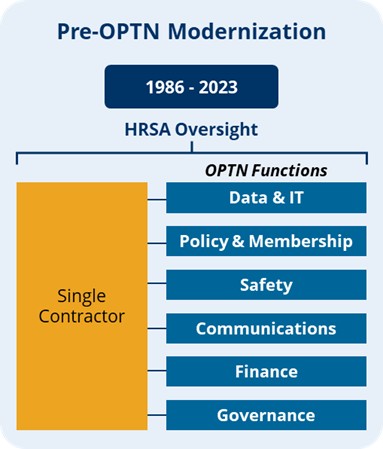
For more than 35 years, the OPTN was operated through a single national contract.
While this structure supported growth in organ donation, procurement and transplantation, the increasing complexity of modern medicine and the demands of real-time technology, safety, data, and public accountability required a new approach.
The bipartisan 2023 Securing the U.S. Organ Procurement and Transplant Network Act gave a clear mandate: bring the OPTN into the modern era of governance, technology, and healthcare delivery.
HRSA’s modernization efforts are designed to:
- Improve patient safety, the guiding principle of the U.S. organ donation and transplantation system
- Increase transparency through improved reporting, clearer accountability and dissemination of information and public dashboards
- Strengthen fairness by supporting more consistent and reliable national allocation practices
- Upgrade technology through modern IT development and management, and improved functionality and real-time tools
- Enhance resilience by reducing dependence on a single vendor
- Support innovation and faster updates to clinical tools and operations
- Improve public trust through better data, more transparency, and stronger oversight
These changes will help save more lives, support donor families, and ensure that the transplant system keeps pace with medical and technological advances.
How HRSA Is Modernizing: A Phased Approach
Phase I: Build Oversight & Operational Capacity
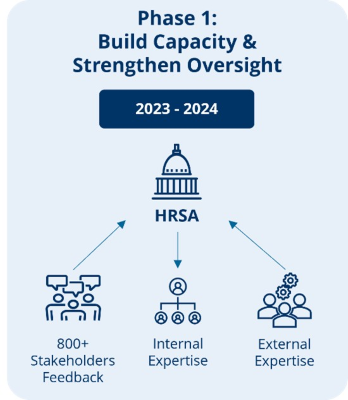
HRSA developed a vision for a modernized OPTN and strategically expanded its Division of Transplantation to support that vision. This included bringing internal expertise and key leadership to HRSA, as well as engaging external expertise and stakeholder feedback to inform the modernization approach. HRSA strengthened its oversight capacity to ensure the system produces measurable results for patients, providers, and the public, establishing a foundation for comprehensive federal program ownership and accountability.
Phase II: Establish Independent Governance, Assess the System & Modernize Operations
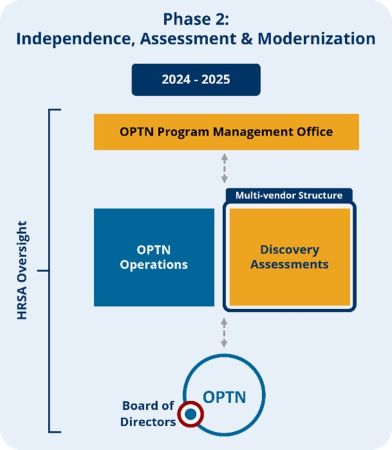
Independent Governance
HRSA established the OPTN Board of Directors as an independent entity for the first time in the system's nearly 40-year history. This included creating a new legal entity and conducting a special election to seat an independent Board separate from any contractor. The American Institutes for Research (AIR) now provides support to this independent Board. This separation reduces conflicts of interest and ensures more objective governance of the national system.
System Assessment
HRSA conducted discovery assessments of the existing OPTN system, which had grown into wide-ranging services and operations, some visible only to small segments of patients and providers. These discovery tasks gathered critical information to inform improvements to core OPTN systems and processes.
Operational Improvements
Using insights from the discovery work, HRSA began modernizing core operations to better serve patients and families, including updating technology infrastructure, strengthening safety protocols, and improving transparency in organ allocation and data reporting.
Phase III: Implement a Modern, Competitive, Multi-vendor Structure
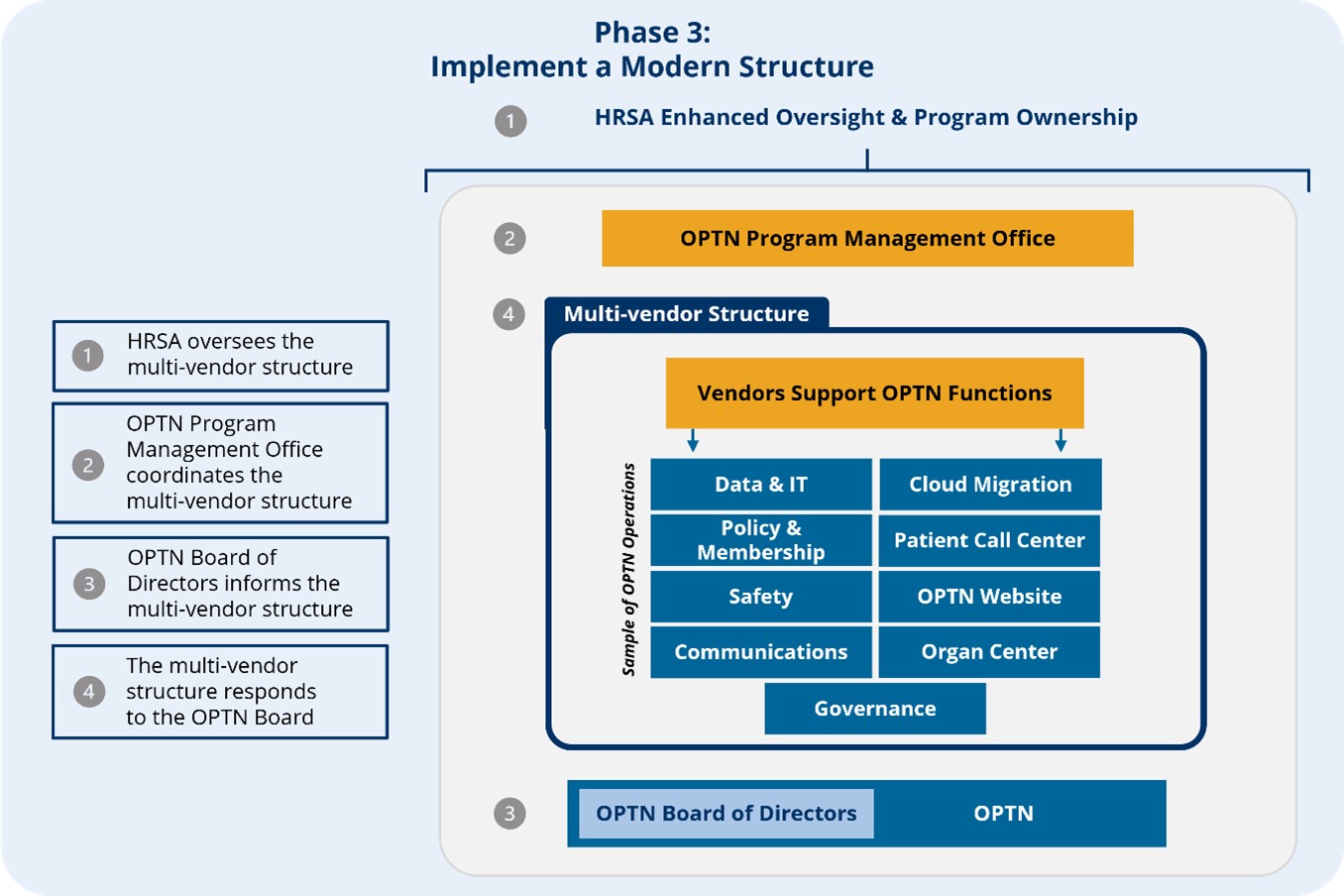
Moving forward, HRSA is implementing competitive contracting for OPTN services, now that key discovery work is complete and HRSA has increased its capacity to coordinate the system.
HRSA is creating a modern, competitive, multi-vendor structure that strengthens performance and transparency across all parts of the system. This approach brings specialized expertise into the OPTN, increases resilience, and ensures that federal oversight is consistent, data-driven, and patient-centered.
| OPTN Function | Service | Vendor |
|---|---|---|
| Governance | Board Support | AIR |
| Meeting & Travel | Meeting & Travel Support | Guidehouse |
| Data & IT | OPTN Matching System & Data | UNOS |
| Data & IT | Transplant Data Services Infrastructure | Sapient |
| Data & IT | SRTR | HHRI |
| Policy | Policy Process & Committee Support | CVP |
| Safety & Membership | Patient Safety & Compliance | GDIT and Arbor Research |
| Safety | Patient Safety & Quality Standards Development | MITRE |
| Communications & Collaboration | OPTN Website | IQ Solutions |
| Communications & Collaboration | OPTN Call Center/Patient Line | Guidehouse |
| Communications & Collaboration | OPTN Collaboration Infrastructure | GDIT |
| Coordination | PMO Support | PCI Professional Services |
Last updated: August 2026
What HRSA is Changing
HRSA is modernizing the OPTN through structural redesign, increased competition, and strengthened federal oversight to advance a system that delivers consistent performance and accountability.
A Modular, Modern Structure
Instead of relying on one contractor for every OPTN function, HRSA now structures the OPTN as a set of specialized service areas, including:
- Patient safety
- Policy and membership support
- Communications
- Data and information technology
- Board and governance support
- Support services phone line
This approach allows HRSA to bring in the best expertise for each area and reduce real or perceived conflicts of interest between these roles.
Increased Competition and Expertise
Through competitive contracting, HRSA is bringing more specialized expertise into the national system, expanding the talent base and improving performance. This strengthens accountability and brings innovative practices and better value to patients, OPTN members, and the public.
Stronger Federal Oversight and Transparency
HRSA is strengthening its core responsibilities as the federal program owner. This includes:
- Setting clear expectations for patient safety
- Increasing transparency around organ allocation policy development and outcomes
- Conducting compliance assessments to ensure OPTN members meet standards
- Improving access to data and public dashboards
- Enhancing oversight of high-risk practices
- Ensuring the OPTN's technology meets modern performance and cybersecurity standards
How Modernization Will Improve the National System
By modernizing, the OPTN will operate with greater reliability, stronger patient safety measures, and improved transparency, providing patients, families, clinicians, and OPOs with the information and tools they need.
Better for Patients and Families
- Improved safety oversight
- Faster and more reliable systems
- Transparency into allocation policy development and practices
- Better information for families considering organ donation
Better for Clinicians and OPTN Members
- Modern tools and resources to support clinical decision-making and care delivery
- More reliable access to national procurement and transplant data
- Stronger and more accessible safety reporting pathways
- Clearer expectations and more dependable national processes
- More consistent governance and support across the donation and transplantation community
Better for the Public and Registered Organ Donors
- Greater transparency
- Stronger accountability
- Better stewardship of a vital national system
Collectively, these enhancements strengthen the integrity and performance of a national system that touches patients, families, and communities across the country.
What’s Next
In the coming year, HRSA will continue to:
- Transition to cloud-based, modern OPTN technologies
- Expand and refine public-facing dashboards
- Improve oversight of safety reporting and allocation practices
- Engage patients, donor families, clinicians, and OPTN members in modernization efforts
- Build new tools to support real-time operations and data transparency
- Ensure that all OPTN contracts reflect modern performance expectations
Modernization is a multi-year process, and HRSA is committed to sustained progress, continued transparency, and ongoing engagement with the communities who rely on this system.