


Why this matters: The plan hinges on three priorities, including HRSA’s priority of strengthening safety, transparency, and accountability across the transplant system while expanding access to living and deceased-donor transplantation.
October 2026 update
OPTN Modernization is a coordinated effort to strengthen the nation’s organ donation, procurement, and transplantation system through safer care, stronger accountability, better data and technology, and more effective governance. Across these areas, HRSA and the OPTN are updating longstanding systems, policies, and oversight approaches to better reflect current clinical practice, public health, and patient needs.
Key developments this month
- HHS launches the Kidney Care National Plan: A department-wide strategy aims to improve kidney care, support innovation, and expand transplant access, with HRSA focused on transplant safety, transparency, and accountability.
- Stronger DCD safeguards take effect November 18: New requirements strengthen patient protections, improve information sharing with families, and establish clearer processes for pausing donation when concerns arise. Training and implementation resources are available.
- Pre-waitlist data work advances: Input from transplant programs, researchers, and technology vendors is shaping new tools to better understand patient referrals, evaluations, and access to transplantation.
For patients, families, and the public
HHS launches Kidney Care National Plan
The U.S. Department of Health and Human Services (HHS) launched the Kidney Care National Plan, a coordinated department-wide strategy focused on revitalizing American kidney care. The Plan identifies where federal action can improve kidney care across the entire spectrum of kidney disease, eliminate regulatory barriers to support innovation and a well-functioning kidney market, and deliver greater choice and superior outcomes to Americans.
Streamlining access to the Scientific Registry of Transplant Recipients annual data report
The 2025 OPTN/Scientific Registry of Transplant Recipients (SRTR) Annual Data Report is currently under development and will be published on the SRTR website, without cross-publication in the American Journal of Transplantation. This approach will support public access to a single, definitive report while reducing the duplicative effort and expense associated with formatting and publishing multiple versions.
Why this matters: A single, freely accessible report will help patients, providers, and the public find authoritative transplant information, prevent confusion about which version to use, and better direct resources toward producing and sharing the data.
Stronger oversight for increased transparency and accountability
Pre-waitlist work moves into design and development
National transplant data generally begins when a patient joins the waiting list, leaving limited visibility of when patients are referred to transplant programs, how and when they are evaluated, or when programs decide to place—or not place—a patient on the waiting list. Following public comment on the proposed Pre-Waitlist Referral and Transplant Evaluation forms, HRSA directed additional discovery work with the transplant community to further inform the forms and how data could be submitted.
The team recently completed the discovery phase, leading 20 open-ended discovery conversations with participants from transplant programs, research and data user groups, and electronic medical record vendors. Their input is helping identify differences in workflows and terminology and shape an approach that limits duplicate data entry.
Next steps include refining the draft specifications, building a Pre-Waitlist application programming interface (API) in HRSA’s Transplant Data Services, and piloting submissions with participating programs and vendors before broader implementation. Collaboration will continue after the data forms are finalized, with a commitment to improving as we learn.
Why this matters: Just as the Ventilated Patient Form aims to help save lives by increasing visibility into which patients are referred to OPOs for potential organ donation, Pre-Waitlist Form data aims to increase visibility into the community of patients who may need a transplant.
Better information about patient referrals and evaluations will help the transplant community understand access, fairness, and demand for care.
OPTN holds in-person board meeting
The OPTN Board of Directors met September 28–29, 2026, at HRSA headquarters, bringing together OPTN leadership and federal partners to advance a shared focus on improving the nation’s organ donation, procurement, and transplantation system. The agenda emphasized coordination across the OPTN’s multi-vendor environment, including contractor responsibilities and effective Board oversight. Policy discussions focused on normothermic regional perfusion and rabies screening, alongside consideration of the Board’s mission and vision statements.
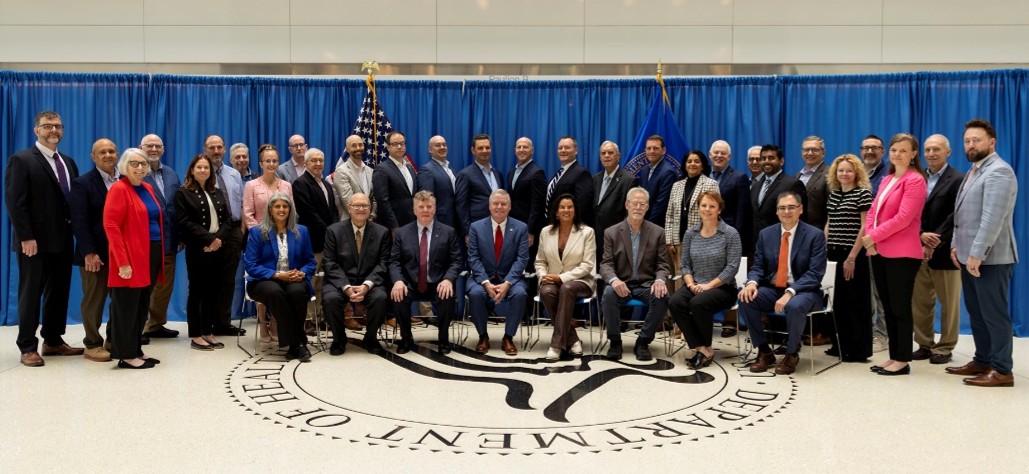
Why this matters: The topics discussed underscore the importance of collaboration across federal agencies, OPTN committees, and contractors to support patient safety and modernization.
Public comment open on OPTN Board and committee applications and forms
HRSA is seeking public comment on a proposed information collection for applications and related forms for individuals serving on the OPTN Board of Directors and its committees. The proposed collection includes Board and committee applications as well as conflict-of-interest, attestation, code of conduct, and confidentiality forms. The comment period is open from October 27, 2026 to November 26, 2026.
Why this matters: The information collected will support a more structured and representative process for selecting OPTN leaders and help HRSA identify and address potential conflicts of interest—strengthening oversight, accountability, and public trust in the governance of the nation’s organ donation, procurement, and transplantation system.
Operational updates for OPTN members
Implementation of Donation after Circulatory Death (DCD) policy changes
New OPTN policy requirements for DCD will take effect November 18, 2026. The changes strengthen protections for potential donor patients entering the DCD pathway, support informed decision-making by potential donor families through enhanced information sharing, and increase transparency, consistency, and accountability across organ donation cases.
What OPTN members need to know:
- Policy guidance and frequently asked questions (XLSX - 54 KB) are now available on the DCD policy webpage.
- The OPTN hosted an informational webinar on September 21. A recording of the webinar is available on the DCD policy webpage.
- UNOS Connect training modules are now available:
- Unplanned DCD Pause Policy: Roles, Procedures, and Compliance for OPO Staff
- Unplanned DCD Pause: Transplant Program Responsibilities
Contact the OPTN
Emergency Services
- The Organ Center is available 24 hours a day at 1-800-292-9537 to support placing donated organs for transplantation, running the donor/recipient matching process, transporting organs and tissues for transplantation, operations support during emergencies, and providing resources to the transplant community regarding organ-sharing policies.
Membership requests and inquiries
- Prospective members should continue to contact membershiprequests@unos.org to obtain and submit completed membership application forms.
- Current OPTN members should continue to use the Member Community Portal to submit membership-related requests.
- Members with open matters related to membership status should direct correspondence to OPTNmembercompliance@hrsa.gov.
Patient safety
- OPTN members should continue to report incidents through the Patient Safety Portal.
- Allegations of misconduct may be reported anonymously via OPTNComplaints@hrsa.gov.
- Members with open matters related to safety and compliance should direct correspondence to OPTNmembercompliance@hrsa.gov.
Policy questions
- For policy questions not related to membership or patient safety, please direct those inquiries to OPTNCommitteeSupport@hrsa.gov.
General inquiries
- Phone: 1-866-OPTN-411 (1-866-678-6411)
- Email: optn411@hrsa.gov
Web support
Moving forward together
OPTN Modernization continues to advance through changes that strengthen patient safety, accountability, transparency, and oversight across the national system. HRSA recognizes the importance of engaging patients, registered organ donors, donor families, transplant professionals, organ procurement organizations, and the broader public throughout this work. Through public comment, implementation resources, and other opportunities for engagement, HRSA is listening to the experiences and perspectives of the community and using that input to inform the modernization process. HRSA remains committed to transparency, collaboration, and continuous improvement as modernization moves forward.
Date Last Reviewed: