


The Health Resources and Services Administration (HRSA) is taking an important step to strengthen the nation’s procurement and transplant data infrastructure and enhance the data and analytic resources that support patients, researchers, health care professionals, and the broader organ donation, procurement, and transplantation community by transitioning procurement and transplant data infrastructure to secure, modernized, government-managed systems.
Building a stronger foundation for transplant data
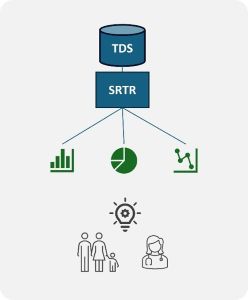
When Congress established the Organ Procurement and Transplantation Network (OPTN), it also recognized the importance of scientific research and analysis in improving the national system. The Scientific Registry of Transplant Recipients (SRTR) was established to support this important function, using data and scientific analysis to advance understanding of donation, procurement, and transplantation, and help improve outcomes for patients over time.
HRSA is strengthening this support through the Transplant Data Services (TDS), a modern, cloud-based data platform designed to replace multiple legacy systems that often produce redundant or conflicting information. TDS will serve as the data backbone and authoritative source for procurement and transplant data, including the datasets and analyses produced by the SRTR. This modernized infrastructure will create greater consistency and efficiency in how transplant data are maintained and used, helping ensure that analyses across the transplant community are based on consistent underlying information.
The transition of IT infrastructure from SRTR to TDS has been ongoing for the past year and is expected to be completed by December 1, 2026.
Improving efficiency and strengthening SRTR services
The SRTR will continue its important scientific and analytic role, accessing procurement and transplant data from TDS and using those data to continue providing the reports, research support, analyses, and other resources relied upon by the transplant community. These SRTR products will be generated on secure, government-managed systems, rather than contractor-owned systems.
The establishment of TDS is the first step in HRSA’s broader strategy to modernize procurement and transplant data operations, reduce duplicative infrastructure and services, improve efficiency, and strengthen the quality and consistency of data available to the transplant community. As HRSA continues to modernize and consolidate transplant data operations, the agency will engage with researchers and other stakeholders to better understand their needs and identify opportunities to improve access to data, analytic capabilities, and research support.