


Proposal overview
Status: Implemented
Sponsoring Committee: Membership and Professional Standards (MPSC)
Strategic Goal: Promote living donor and transplant recipient safety
Effective date: March 1, 2017
Policy notice (PDF - 70 KB) 1/2017
Board briefing (PDF - 396 KB) 12/2016
UNOS and OPTN member impact summary (PDF - 860 KB) 12/2016
Problem statement
Executive summary
OPTN Bylaws require that a designated liver transplant program’s primary liver transplant physician must have “current board certification in gastroenterology.” The OPTN/UNOS Membership and Professional Standards Committee (MPSC) is increasingly receiving liver program key personnel applications that propose a primary transplant physician who meets all the Bylaws’ requirements except they have current board certification in transplant hepatology, with lapsed gastroenterology board certification. The MPSC generally feels that these individuals meet the intent of the key personnel Bylaws and that they are qualified to serve as a liver program’s primary transplant physician; however, it ultimately rejects these applications because the individual does not fulfill the explicit requirements in the Bylaws. Although not presented as frequently, the MPSC is also aware of a subspecialty board certification created for cardiologists by the American Board of Internal Medicine- advanced heart failure and transplant cardiology. This proposal recommends replacing the gastroenterology board certification requirement for primary liver transplant physicians with a requirement that they are currently certified in transplant hepatology, or have a pediatric transplant hepatology certificate of added qualification. The MPSC ultimately decided not to incorporate the advanced heart failure and transplant cardiology board certification at this time, but believes this will need to be reconsidered as this certification becomes more prevalent. Requiring board certification for a transplant program's primary liver physician that entails more transplant-specific training stands to improve outcomes and promote patient safety for candidates on the waiting list, living donors, and transplant recipients. Additionally, modifying OPTN Bylaws to reflect current practice helps promote the efficient management of the OPTN.
Read the full proposal (PDF - 124 KB).
Impact
UNOS and OPTN member impact summary
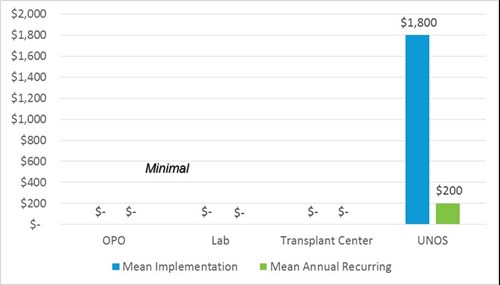
Project size/Complexity
UNOS
Implementation hours for Member Quality and Research total 30 hours.
Ongoing hours are minimal.
Project size = Very Small
Member
Transplant center
The implementation effort for Transplant Centers is minimal, as there is already a framework in place to verify physician requirements. Internal policy updates will require minimal staff time.
Implementation costs include staff training on requirements, internal policy updates, and time to collect and enter data.
OPOs and Labs
OPOs and labs are not affected.
Policy and bylaws changes
OPTN Policies/Bylaws affected
Bylaws appendices
- F.4 (Primary Liver Transplant Physician Requirements),
- F.4.C (Three-year Pediatric Gastroenterology Fellowship Pathway),
- F.4.D (Pediatric Transplant Hepatology Fellowship Pathway),
- F.4.E (Combined Pediatric Gastroenterology/Transplant Hepatology Training and Experience Pathway), and
- H.3 (Primary Heart Transplant Physician Requirements)
Summary of changes
The Bylaws now include the following additional options for board certification for the liver and heart primary transplant physicians:
- Primary liver transplant physician – can hold current board certification in either gastroenterology or transplant hepatology.
- Primary heart transplant physician – can have current certification in adult or pediatric cardiology or advanced heart failure and transplant cardiology.
What members need to do
No immediate action will be required of members upon the implementation of when we implement these changes. From the implementation date forward, however, we will evaluate all primary liver physician and primary heart physician membership applications based on the new requirements.
Comments
The comment period for this proposal is now closed.