


Transplant Data Services (TDS) is a key part of the OPTN infrastructure modernization effort. It will support everyone who creates, submits, or uses organ transplant and procurement data, including patients, families, providers, researchers, and policymakers.
What is TDS?
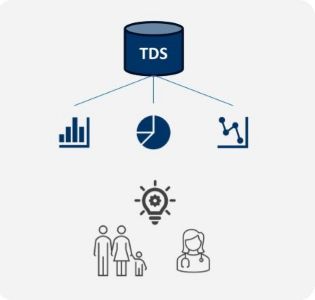
TDS is a modern, cloud-based data platform designed to replace multiple legacy systems that often produce redundant or conflicting information.
By consolidating data in a single, unified system, TDS makes it easier to:
- Access and navigate organ procurement and transplant data
- Standardize how data is collected, processed, and used
- Ensure consistent data standards
- Streamline data submission processes
The result is a more secure, efficient, and reliable environment for all users.
Why it matters
High-quality data is essential to improving transplant outcomes and ensuring a safe, fair system.
Today, the data landscape can be complex and difficult to navigate, creating challenges for both those who submit the data and those who rely on it for decision-making.
TDS addresses these challenges by:
- Reducing redundancy across data files and tools
- Improving access to clear, consistent information
- Minimizing the burden on data submitters
Over time, TDS will enable faster insights, greater transparency, and stronger support for research and policy development.
Key TDS initiatives
TDS supports several major initiatives aimed at improving how transplant and procurement data is collected, managed, and used across the system.
SRTR migration
The Scientific Registry of Transplant Recipients (SRTR) is a national data system that collects, analyzes, and publicly reports data on organ procurement and transplantation in the United States.
HRSA is modernizing the SRTR by migrating its infrastructure to a secure, cloud-based environment. This upgrade will:
- Improve system reliability, security, and resilience
- Enable more efficient and secure data sharing with authorized partners
- Provide a scalable foundation for future growth
As part of broader OPTN modernization efforts, this transition is vendor-agnostic, meaning the system is not tied to a single vendor. This approach promotes long-term flexibility, encourages competition, and supports responsible cost management.
By modernizing the technology behind the SRTR, HRSA is strengthening the foundation for transparency, high-quality data analysis, and continued service to the broader community.
Ventilated Patient Form
The Ventilated Patient Form (VPF) captures data from the earliest stages of the organ donation process: when patients are first referred for potential donation.
More than 1,000,000 patients annually are referred by hospital to OPOs for potential organ donation. The VPF population is a subset of this total group and will be substantially smaller. Understanding when, where, and how patients referred to OPOs enter the deceased donation process will support national efforts to improve the safety and effectiveness of organ donation and procurement.
The VPF is built to balance insight with efficiency and data protection:
- Data is submitted through OPOs, reducing burden on hospitals and clinical staff.
- It focuses only on deceased patients, supporting data minimization and avoiding unnecessary collection of sensitive information.
The VPF is fully integrated within TDS, supporting automated data flow from OPO systems into the centralized TDS data warehouse without manual entry.
This enables:
- More timely and accurate analysis
- Improved system transparency
- A stronger foundation for innovation and performance assessment
Transition to the VPF
To support implementation of the VPF, OPTN is retiring the legacy Death Notification Registration (DNR) form and the Monthly Donation Data Report: Reported Deaths (DDDR). This change does not affect the Deceased Donor Registration (DDR) form, which will continue to be used.
This transition supports the goals of TDS by reducing redundant reporting, improving data consistency, and streamlining data submission across the organ donation, procurement, and transplantation system.
Timeline for Transition
- Patient referrals on or before Sept. 30, 2026: Use the Death Notification Registration (DNR) form. OPOs must submit forms for referred patients for the month of September by Oct. 31, 2026.
- Patient referrals on or after Oct. 1, 2026: Use the VPF. OPOs must submit forms for referred patients for October by Nov. 30, 2026.
What’s next
TDS development and enhancement will continue in phases, with ongoing input from transplant programs, OPOs, researchers, and other stakeholders.
As development continues, new data access and submission capabilities will be rolled out incrementally. Stakeholder feedback will remain central to ensuring the system meets real-world needs.
Over time, TDS will help create a more connected, data-driven national system that better supports decision-making, improves outcomes, and advances fairness.