If you help care for older adults or adults with intellectual disabilities, this page is for you. It explains why daily oral care is important and how you can support the people you care for. You’ll also learn why older adults and adults with intellectual disabilities may have trouble caring for their own oral health and how certain medical conditions and common medicines can increase the risk of developing tooth decay.
What is oral health and why is it important?
Oral health is the health of the mouth, including the teeth, gums, throat, tongue, and bones around the mouth. Good oral health is important for people of all ages and abilities. It affects how people communicate, chew, swallow, and enjoy food. Good oral health supports confidence in social settings and emotional and mental well-being.
Poor oral health can lead to cavities (tooth decay), gum disease (periodontitis), and tooth loss. It is also associated with health conditions in other parts of the body, like heart disease or dementia.1,2
Why is oral health care important for older adults and adults with disabilities?
Older adults and people with disabilities often face unique challenges in maintaining their oral health. These challenges may be related to some medical conditions and the medicines they take. Gum disease also occurs more often and at a younger age among people with developmental disabilities.3
How do I care for the oral health of older adults and adults with disabilities?
Some people in your care may be able to manage their own oral health, while others may need more support. The following guidelines apply to everyone you care for, regardless of ability:
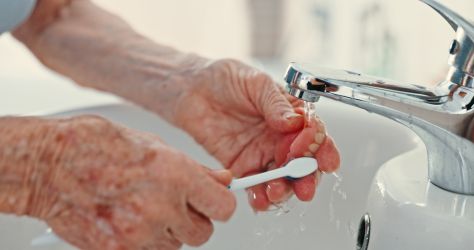
- Ensure that their teeth are brushed two times per day, in the morning and at night. Teeth should be brushed on all sides in small, circular motions, using a soft-bristle toothbrush and toothpaste with fluoride, which protects teeth from decay.
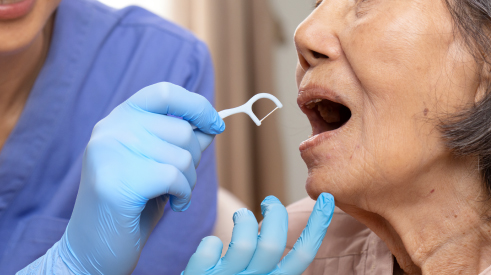
- Confirm that their teeth are also flossed daily. For the best clean, dental floss should be curved around both sides of every tooth one tooth at a time.
- Keep dentures clean and free of food residue. If the person wears dentures, make sure they are removed at night and soaked in fresh water or denture-cleaning solution.
- Manage dry mouth. Encourage people with dry mouth to take frequent sips of water or sugar-free drinks to help relieve symptoms.
- Recommend those in your care have dental check-ups twice per year. Dentists can identify problems early to help avoid pain or infection.
How can I help older adults and adults with disabilities care for their own oral health?
Encourage self-care whenever possible. You can support independence while still ensuring good oral hygiene by using the following strategies:
- Offer kind reminders. If the person you care for struggles with memory, provide gentle reminders. Place a toothbrush and toothpaste where they are easy to see, such as on the bathroom counter. You can also hand them oral care supplies when the time comes.
- Guide brushing. If needed, help guide toothbrushing by placing your hand over the person’s hand while they brush.
- Use adaptive tools to make oral care easier. Offer toothbrushing and flossing tools or adapters to help people with movement disorders, neurodegenerative conditions, or joint pain. These include:
- Toothbrushes with ergonomic grips that are easier to hold
- Utensil holders that secure the toothbrush to their hand, reducing the need for a firm grip
- Multiple-sided toothbrushes that brush all sides of the teeth at once or electric or battery-operated toothbrushes
- Floss holders, small plastic tools with a handle and small piece of dental floss, or a water flosser, which uses water to clean between the teeth instead of floss
How do I care for the oral health needs of those who need daily help?
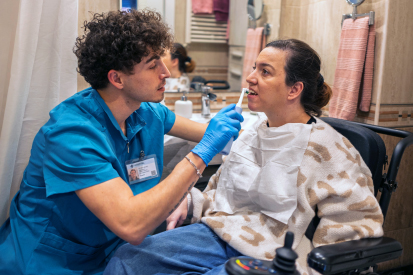
Some people in your care may not be able to care for their own oral health. In these cases, you may need to brush and floss their teeth or clean their dentures for them. Remember to talk to the person throughout the process so they know what to expect. Use the “tell-show-do” approach:
- Tell the person what you are going to do.
- Show them how you will do it.
- Do the task once they understand.
Here are some other tips to help make oral care easier and more comfortable for both you and the person you are caring for.
- Choose a well-lit, open space. Use an area with good lighting and enough room to move, like the kitchen or dining area. Gather all supplies before you begin. This may include a toothbrush, toothpaste, floss or flossing tools, a towel, a glass of water, a bowl or empty cup, and disposable gloves.
- Position the person upright. Seat the person in an upright position, such as in a chair. Position yourself so you can clearly see all surfaces of their teeth. You may stand or sit in front of, behind, or beside the person.
- Remove dentures and clean the mouth. If the person wears dentures, remove them first. Gently wipe the inside of their cheeks and along the gums with damp gauze to remove any food or debris.
- Adjust toothpaste use if needed. If toothpaste feels uncomfortable or leaves a bad taste, you may brush with water instead.
- Help keep the mouth open safely. Use a foam mouth rest or the two-toothbrush technique to prevent accidental biting. The person can rest their teeth on the foam or the handle of a second toothbrush while you brush or floss the other side of the mouth.
- Wipe gently if rinsing is difficult. If the person is unable to rinse, offer a drink of water or gently sweep the mouth with clean, damp gauze.
- Watch for signs of pain or problems. Some people may not be able to communicate when they are experiencing mouth pain. Look for any spots, lumps, white or red patches, or thick areas in their mouth or on their lips.
What challenges do older adults face in maintaining good oral health?
Older adults face unique challenges in maintaining good oral health. Some may have limited ability to care for their own teeth. Frailty or movement impairments, like those caused by arthritis or neurodegenerative diseases, can make brushing and flossing more difficult.4,5
Certain diets can also increase risk. People who eat soft or pureed food may be at greater risk of tooth decay because these foods are harder to remove from their teeth. 1
Access to professional dental care can be another challenge. Financial strain, lack of dental insurance, and limited transportation can limit access to dental services. Some older adults are unable to leave their home and require in-home dental care.
Communication challenges may also affect oral health. Vision loss, hearing loss, and other communication barriers can make it harder for someone to understand instructions for at-home oral care.
What challenges do adults with disabilities face in maintaining good oral health?
Adults with intellectual disabilities may have difficulty caring for their own teeth and may also face barriers to professional dental care.
Some dental offices are not fully accessible. For example, offices may not be designed for people who use wheelchairs. Special arrangements and help transferring patients to the dental chair may be needed.
Behavioral and emotional challenges can also affect dental care. Anxiety about unfamiliar places or procedures may make dental visits uncomfortable or difficult.
In addition, not all dentists are trained to care for people with disabilities. Some may lack experience or training in how to accommodate physical, behavioral, or emotional needs.
What medical conditions can affect oral health?
Some chronic (long-lasting) health conditions can increase the risk of oral health problems, such as tooth decay, gum disease, or tooth loss. Conditions that may affect oral health include the following:
- Dry mouth: The feeling that there is not enough saliva (spit) in the mouth. People with dry mouth may have trouble speaking, eating, swallowing, or wearing dentures. Dry mouth can increase the risk of tooth decay.6
- Diabetes: A condition that occurs when the amount of sugar in the blood is too high. High blood sugar can increase harmful bacteria in the mouth. People with diabetes are three times more likely to develop tooth decay and gum disease. Diabetes is also linked to dry mouth. Controlling blood sugar, daily brushing and flossing, and visiting the dentist twice a year can help prevent diabetes-related oral health problems.7
- Depression: Late-life depression can reduce a person’s ability or motivation to perform daily oral care. People with depression report more frequent tooth pain, painful chewing, and bleeding gums, and have a higher risk for gum disease and chewing impairment.1
- Cognitive impairment and dementia: Dementias, such as Alzheimer’s disease, may cause people to forget to perform oral care or forget how to do it. Missed oral care can lead to gum disease, tooth decay, and tooth loss.1
- Sjogren’s disease: A condition where the immune system attacks glands that produce moisture in the eyes, mouth, and other parts of the body. The dry mouth caused by Sjogren’s disease can make it difficult to swallow, speak, and taste foods, and it increases the risk of tooth decay.8
- Osteoarthritis: A condition that causes the tissue in the joints, like the fingers, knees, and hips, to break down over time, which causes joint pain and stiffness. This can make brushing and flossing difficult.1
In some cases, poor oral health may also worsen chronic conditions. The exact relationship between oral health and these conditions isn't fully understood yet.1
What medicines can affect oral health?
Nearly 90% of adults age 65 or older take prescription medicines.1 Some medicines may increase the risk of oral health problems, including tooth decay and tooth loss. One common side effect of many medicines is dry mouth.
Medicines and treatments that may cause dry mouth include:
- Depression medicines
- Bladder control medicines
- High blood pressure medicines
- Asthma medicines
- Allergy medicines
- Radiation treatment for head and neck cancer
Where can I find more information about oral health for older adults or adults with disabilities?
Review these resources from the National Institute of Dental and Craniofacial Research (NIDCR) for more information:
Additional resources:
Where can I find free or low-cost dental care for those in my care?
People in your care should see a dentist twice a year. Share these resources with them and their loved ones to help find free or low-cost dental care.
- HRSA’s Oral Health chatbot can help patients find a health center that may offer dental services.
- Finding Dental Care, a resource from NIDCR, provides general information on how to locate dental care.
- Finding Low-Cost Dental Care: Information for Caregivers (PDF - 323 KB), a resource from NIDCR, offers guidance for caregivers on locating affordable dental services.
- Medicare, a federal health insurance program for people age 65 and older and people under age 65 with certain disabilities, covers some dental services related to specific medical conditions or treatments, but it does not cover most routine care. Medicare Advantage (also known as Part C) is an alternative to Medicare from a private company. Most Medicare Advantage plans offer extra benefits that Medicare doesn’t cover, including dental. Visit Medicare Dental Services or Understanding Medicare Advantage Plans (PDF - 726 KB) for more information.
- Medicaid is a state program that provides dental benefits in some cases. Benefits for adults vary by state. Visit the Medicaid website and select “Learn How to Apply for Coverage” or contact your state Medicaid program for more information.
- Your state health department or other local agency on aging may have information about free or low-cost dental care in your area. These local resources may also have information on where to find transportation to dental appointments.
References