









Periodontal (gum) disease is the most common cause of tooth loss among adults. It affects about 46% of adults ages 30 or older; about 9% of adults have severe periodontal disease.1
Official websites use .gov
A .gov website belongs to an official government organization in the United States.
Secure .gov websites use HTTPS
A lock () or https:// means you’ve safely connected to the .gov website. Share sensitive information only on official, secure websites.
HRSA’s programs help train oral health care professionals, support the oral health workforce in rural communities, and connect people to oral health care services. Learn more in the HRSA Oral Health – Across the Agency Fact Sheet (PDF - 783 KB).
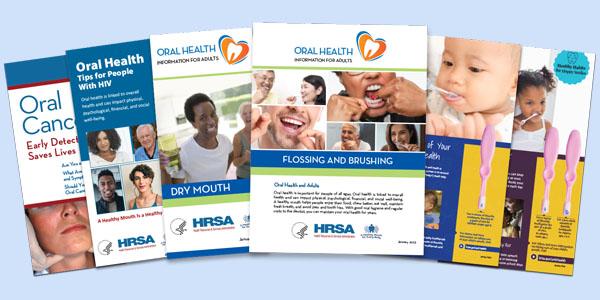
Download oral health resources you can use with your patients.
Learn how to support the oral health of people you care for.
Explore ways you can care for patients with chronic diseases.
Get images and posts that are ready for you to use or tailor to your social media.
Find trusted research on improving oral health for everyone.
Periodontal (gum) disease is the most common cause of tooth loss among adults. It affects about 46% of adults ages 30 or older; about 9% of adults have severe periodontal disease.1
Periodontal (gum) disease is the leading cause
of tooth loss among adults. It affects
about 46% of adults ages 30 or older.
About 9% of adults have severe
periodontal disease.1
Between 2017 and 2020, 46% of children ages 2 to 19 in the
United States had untreated or restored dental cavities
in one or more primary or permanent teeth.2
1 in 4 adults
ages 20 to 64
currently has
cavities.3
An estimated 60,480 people in the United States
will be diagnosed with oral cavity
and pharynx cancer in 2026,
and an estimated 13,150 people
will die from the disease.4
In 2019, nearly 58% of rural adults
ages 18 to 64 had a dental visit
in the past year, compared with about 67%
of urban adults—a 9.1 percentage-point gap.5
About 60% to 75% of pregnant women have gingivitis,
an early stage of periodontal (gum) disease.6
1. National Institute of Dental and Craniofacial Research (n.d.). Periodontal (Gum) Disease.
2. Centers for Disease Control and Prevention. National Health and Nutrition Examination Survey (PDF).
3. Centers for Disease Control and Prevention (2024). 2024 Oral Health Surveillance Report: Selected Findings.
4. National Cancer Institute, SEER Program. (2024). Cancer Stat Facts: Oral Cavity and Pharynx Cancer.
5. Centers for Disease Control and Prevention, National Center for Health Statistics. (2021). Urban-Rural Differences in Dental Care Use Among Adults Aged 18–64, 2019.
6. Centers for Disease Control and Prevention. (2024). Talking to Pregnant Women about Oral Health.